
Vtg Domestic 264 Heavy Duty Sewing Machine Japan Case Manual Accessories Metal
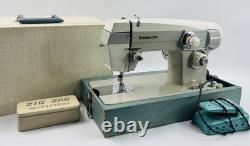
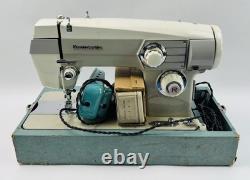
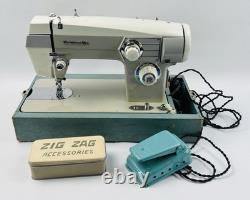
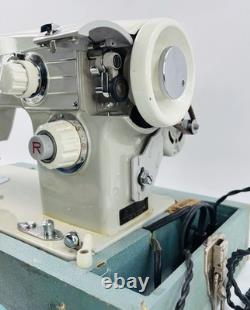
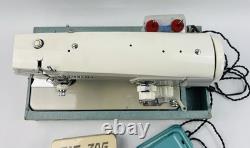
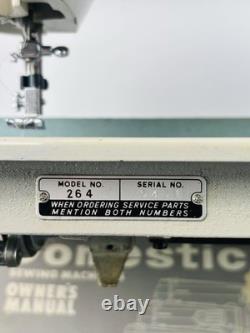
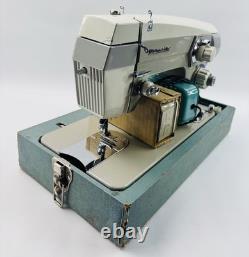
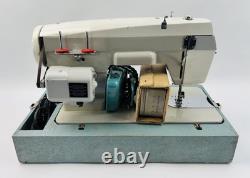

Brand: Domestic Model: 264 Serial Number: 5451 Country of Origin: Japan (Built to rigid specifications) Era: Vintage Circa 1960s - 1970s Type: Mechanical Heavy-Duty Zig Zag Sewing Machine Color Profile: Two-tone vintage off-white/cream and cool grey machine body, highlighted by an original matching turquoise/teal metal foot pedal and carrying case trim base. Material: Heavy-duty all-metal cast body and internal mechanical component assembly. Department: Unisex Adults / Crafting, Sewing, & Textiles.
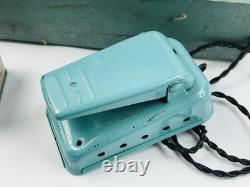
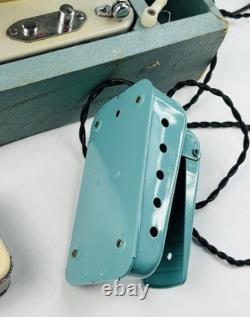
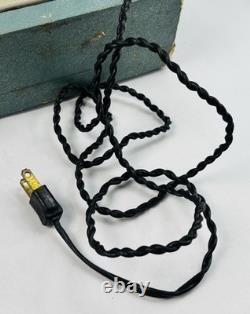
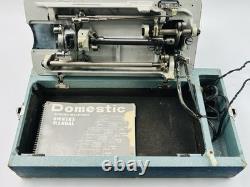
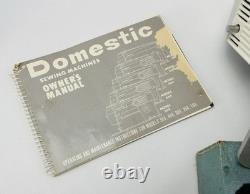
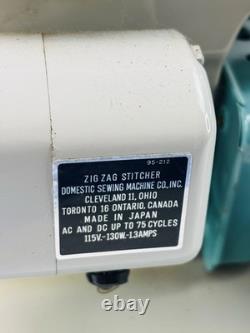
Original Domestic Model 264 mechanical sewing machine unit. Original spiral-bound Domestic Sewing Machines Owner's Manual (Operating and Maintenance Instructions covering Models 564, 464, 364, 264, and 164). Original turquoise/teal metal electric foot controller pedal with heavy-duty black twisted power cord Motor specifications: Zig Zag Stitcher, Domestic Sewing Machine Co.
Cleveland, Ohio / Toronto, Canada. 115V, 130W, 1.3 Amps, AC and DC up to 75 cycles.
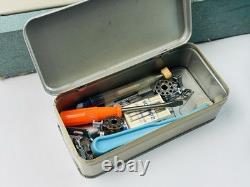
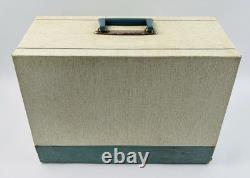
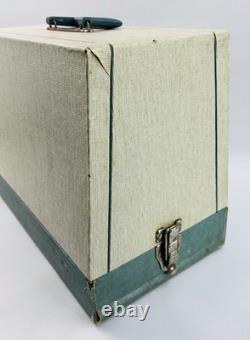
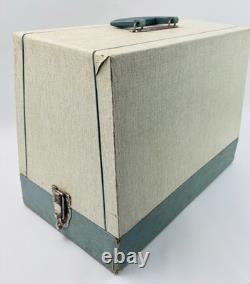
Original vintage cream-colored, textured linen-patterned hard-shell carrying case lid with a dark teal top handle and secure dual side latches. Original vintage "Zig Zag Accessories" metal tin storage box. Internal tin contents: Assorted metal bobbins, vintage Schmetz needles, compact maintenance screwdriver, fabric marking pencil, and a sewing seam gauge wheel tool.
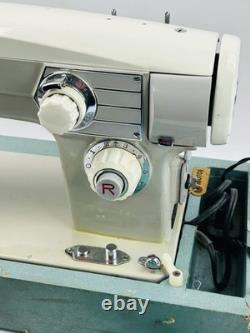
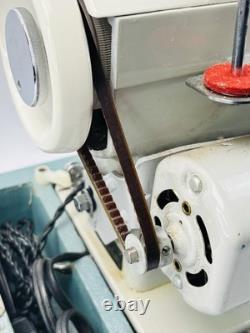
Precision stitch length adjustment dial with a built-in "R" Reverse push-button. Multi-position needle control switch (Left / Center / Right alignment). Built-in drop-feed control button mechanisms (marked for "Down" and "Up" adjustment). Side-mounted swing-open mechanical access panel for easy internal oiling and belt adjustments. Top-mounted dual spool pins with protective red felt buffer pads. All-metal mechanical drive components under the hinged base plate for high-torque fabric penetration. Rear-mounted motor assembly connected via a heavy-duty ridged rubber drive belt. Condition: Excellent, ultra-clean vintage cosmetic and mechanical condition. The enamel paint finish on the metal body is smooth and glossy, showing virtually no significant chips, deep scratches, or rust. All dials, switches, and mechanical levers actuate smoothly and crisply.The mechanical undercarriage linkage is exceptionally clean, well-greased, and free of corrosion. The original drive belt is intact with excellent tension and no dry-rotting. The original electrical cords are thick, flexible, and completely free of exposed wiring.
The original paper owner's manual is fully intact and readable, showing only a small spot of surface wear/paper loss on the right-hand margin of the cover page. The hard-shell carrying case lid is sturdy and latches tightly to the base, showing only minor age-appropriate exterior storage scuffs and minor oxidation on the metal latches. From a clean, smoke-free home. The history of the Domestic Model 264 is a fascinating story of post-WWII international trade, industrial engineering, and the golden age of Japanese manufacturing. It belongs to a celebrated class of sewing machines that collectors affectionately refer to as "Japanese Clones" or Badged Machines.
Here is the historical journey of how this style of machine came to be. The Post-WWII Rebuilding of Japan. Following the end of World War II, as part of the Allied reconstruction efforts, the United States helped Japan rebuild its industrial manufacturing base. Instead of heavy military manufacturing, Japanese factories were repurposed for high-precision consumer goods. Using sophisticated metallurgical techniques and strict quality control standards overseen by the Japanese Sewing Machine Inspection Institute (JISMII), Japanese factories began producing heavy-duty mechanical sewing machines. These machines weren't flimsy; they were engineered with solid, cast-metal bodies and hardened steel internal gears to compete directly with American giants like Singer. The Rise of "Badged" Brands and the Domestic Name. To get these exceptionally built machines into Western homes, Japanese manufacturers partnered with established American and Canadian distributors.The factories in Japan would produce the high-quality internal mechanical chassis (the "head" of the machine), and then "badge" it with a historic brand name favored by Western consumers. The Domestic Sewing Machine Company was originally an old, respected American brand founded in Ohio back in 1869. By the 1960s and 1970s, the name was utilized by distributors to market these premier Japanese import models across North America.
The machine's motor plate proudly tells this exact geographic story: Domestic Sewing Machine Co. Cleveland, Ohio / Toronto, Canada - Made in Japan. The Mid-Century Modern "Space Age" Aesthetic. By the time the Model 264 was produced in the late 1960s or early 1970s, sewing machine design had shifted away from the old, black-and-gold filigree style of the 1940s.
Instead, manufacturers embraced the Mid-Century Modern and Space Age design movements. This era focused on sleek, streamlined, aerodynamic lines, chrome accents, and distinct "kitchen appliance" color palettes. This model perfectly captures this design history with its geometric two-tone cream and cool grey enamel body, paired with the vibrant turquoise-blue accents on the foot pedal, case trim, and accessory box. It was designed to look like a cutting-edge piece of modern technology on a 1970s crafting desk. The Legacy of the All-Metal Workhorse.Shortly after this machine was produced, the global sewing machine market shifted heavily toward plastic components, computerized circuit boards, and nylon gears to cut manufacturing costs. Because of that shift, machines like the Domestic 264 are deeply appreciated today. It represents the absolute pinnacle of purely mechanical, high-torque sewing engineering. Because it has zero plastic gears inside to snap and no computers to fry, it was built to survive generations-making it a highly reliable, heavy-duty mechanical workhorse that can sew through denim, upholstery, and leather just as smoothly today as it did over 50 years ago.